


Walk through an older factory and you can often spot a machine that has been repaired several times over the years.
The motor may have been replaced.
Sensors may have been upgraded.
Control systems may have changed completely.
Yet one component often receives little attention until a problem appears: the gearbox.
Interestingly, many equipment operators do not start asking questions about gearbox materials until corrosion becomes visible. A painted housing begins to chip. Moisture reaches exposed surfaces. Cleaning chemicals leave marks that were not there before.
That is usually when discussions about stainless steel worm gear reducers begin.
The topic is not only about appearance. It is about how equipment survives environments that are far less friendly than a typical workshop floor.
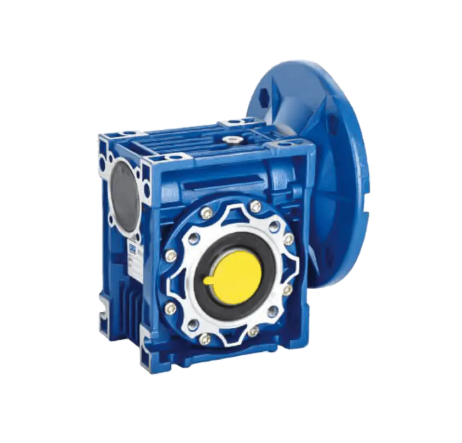
Not every gearbox operates in a clean, dry room.
Food processing lines, beverage facilities, pharmaceutical workshops, and coastal factories often expose equipment to moisture on a daily basis. In some locations, machinery may be washed repeatedly throughout the week.
Under those conditions, surface protection becomes more important than many people expect.
A gearbox that performs well in a dry warehouse may face very different challenges when water, humidity, and cleaning agents become part of normal operation.
This is one reason stainless steel worm gear reducers are frequently associated with industries where regular cleaning is unavoidable.
One reason corrosion causes trouble is that it rarely appears all at once.
Equipment may operate normally for months or even years before visible signs begin to develop. Because the change is gradual, people often underestimate its impact.
A small area of discoloration may not seem important at first. Later, maintenance teams find themselves spending additional time cleaning, inspecting, or replacing affected parts.
Many engineers view stainless steel worm gear reducers as a way to reduce these long-term concerns rather than solve a sudden emergency.
The benefit is often measured over years rather than weeks.
Industrial technology changes constantly.
Motors become more efficient. Controls become smarter. Production lines become increasingly automated.
Yet worm gear reducers continue to appear in many applications.
Part of the reason is their ability to provide significant speed reduction within a relatively compact structure. In situations where smooth and controlled movement is required, the design remains practical.
That explains why stainless steel worm gear reducers are often chosen not only because of their housing material but also because of the transmission system inside.
The material and the gear design work together rather than serving separate purposes.
Many purchasing decisions are influenced by factors that have little to do with power ratings.
Cleaning is a good example.
In some facilities, equipment surfaces are expected to remain easy to wash and inspect. Rough coatings, peeling paint, or difficult-to-clean areas can become maintenance concerns over time.
As a result, stainless steel worm gear reducers are sometimes selected because they fit more naturally into environments where cleanliness is part of daily operations.
The decision may have as much to do with maintenance routines as with gearbox performance.
People who work around machinery every day tend to focus on practical observations.
Common comments include:
less concern about surface rust
easier cleaning after production shifts
improved appearance over time
suitability for humid environments
compatibility with washdown procedures
None of these points alone explains the popularity of stainless steel worm gear reducers. Together, however, they help explain why the category continues to grow in certain industries.
An important detail is that stainless steel is not automatically the correct choice for every project.
Many standard gear reducers perform perfectly well in dry operating environments. Choosing equipment always depends on the actual conditions rather than trends or marketing claims.
This is why experienced equipment buyers often start by evaluating where the gearbox will operate before comparing technical specifications.
In some cases, a standard solution is entirely adequate.
In others, stainless steel worm gear reducers may offer advantages that become apparent only after years of service.
One interesting aspect of industrial equipment is that the best decisions are not always obvious on the day of installation.
A gearbox may look almost identical to another unit sitting beside it. The differences sometimes become noticeable only after long exposure to moisture, cleaning cycles, or demanding production schedules.
That may be one reason stainless steel worm gear reducers continue to attract attention across multiple industries. Their appeal is rarely based on a single feature. Instead, it comes from a combination of durability, maintenance considerations, and the practical realities of operating machinery in environments where ordinary materials may face additional challenges.
For many facilities, the question is not whether a gearbox can run today. The more important question is how it will look and perform years from now. That is where material choice often becomes part of the conversation.
 中文简体
中文简体 русский
 Español