


A worm-gear Industrial Gear Reducer ships from the factory already filled with the correct lubricant and tested against its rated specification, but a large share of what determines how long that unit actually lasts in the field gets decided during installation rather than manufacturing.
Lubrication inside a worm-gear Industrial Gear Reducer depends on the oil sitting at the correct level relative to the worm and gear mesh, and that level assumption only holds if the unit gets mounted in the orientation it was actually built for. Installing a reducer specified for horizontal mounting in a vertical orientation instead, or vice versa, throws off where the oil pools inside the housing, which can starve the gear mesh of lubrication in one orientation or cause oil to leak past a seal never designed to hold that orientation's pressure. Confirming mounting orientation against the original order before installation, rather than assuming any orientation works once the unit arrives on site, protects the service life the lubrication system for an Industrial Gear Reducer was designed to deliver.
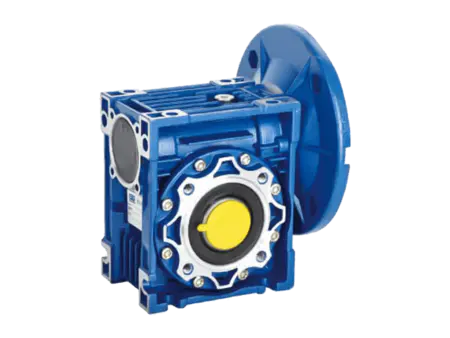
Fitting a pulley, coupling, or gear onto the output shaft of an Industrial Gear Reducer puts direct axial force through to the internal worm and bearing assembly if that fitting gets forced on with a hammer rather than pressed on properly. A shock load transmitted back through the shaft during a forceful fit can damage the internal gear mesh or bearing races in ways that only show up as premature wear or noise well after installation, long after anyone would think to connect the symptom back to how the coupling went on. Using a proper puller or press to seat output-side components keeps that installation force contained to the fit itself rather than transmitting it into the gear train the reducer depends on. This is a low-cost step during installation that has an outsized effect on avoidable early failures.
A worm gear pair holds its position without backdriving under load, which makes an Industrial Gear Reducer built this way well suited to applications where the driven load must not slip back when power cuts off. That self-locking behavior comes from the sliding contact between worm and gear, which generates more friction and heat during normal operation than a helical or spur gear pair achieves through rolling contact instead. Oil condition matters more on a worm reducer for exactly this reason, since that lubricant is doing more work managing friction-generated heat than it would in a gear type that doesn't rely on sliding engagement, and following the manufacturer's oil change interval keeps that heat management working the way the self-locking design assumes.
Mounting orientation, installation technique, and lubrication upkeep all shape how long an Industrial Gear Reducer performs once it leaves the factory, and each one traces back to a detail decided well before the unit is bolted down and put into service.
 中文简体
中文简体 русский
 Español