


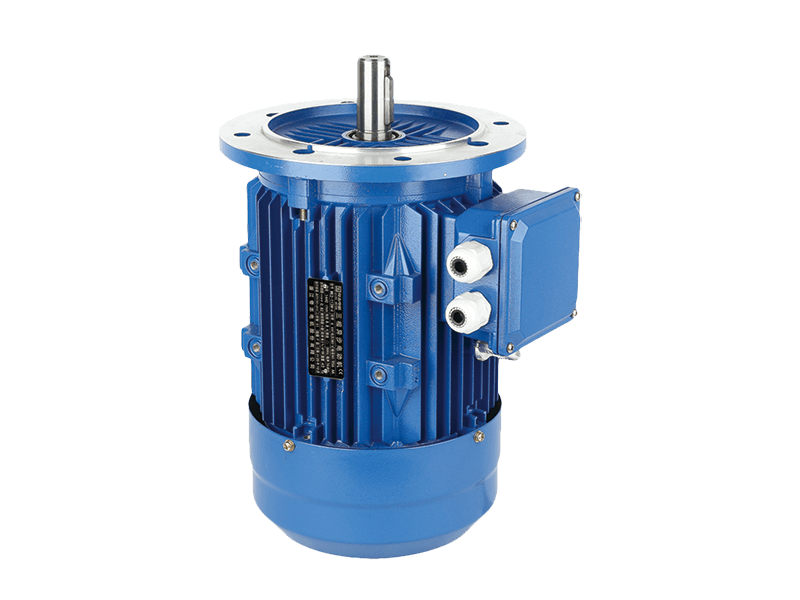
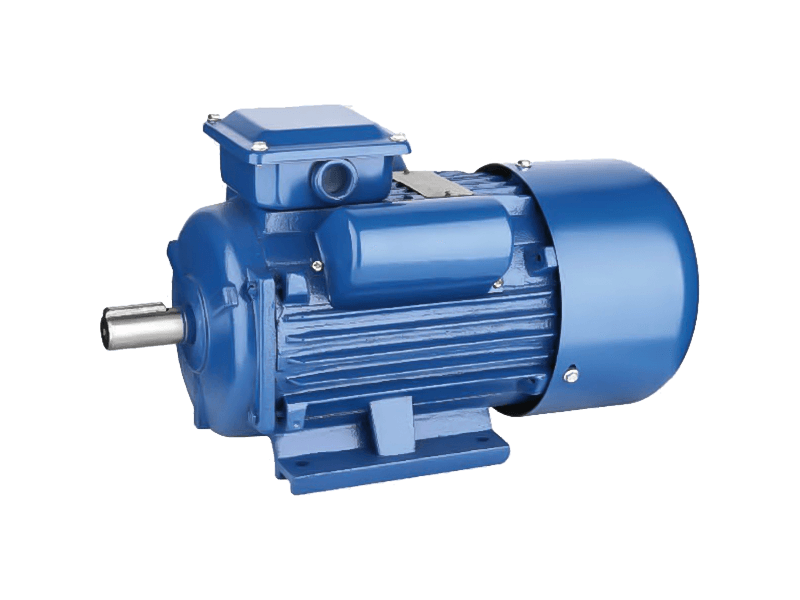
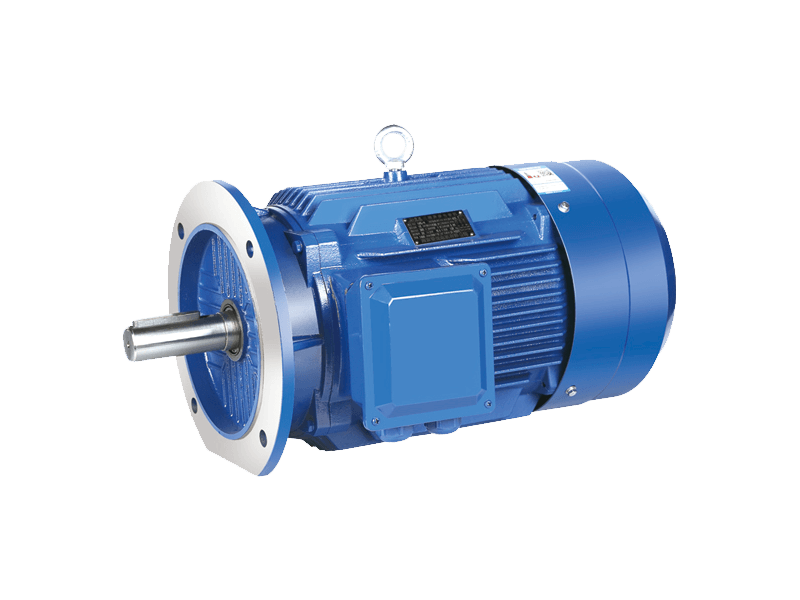
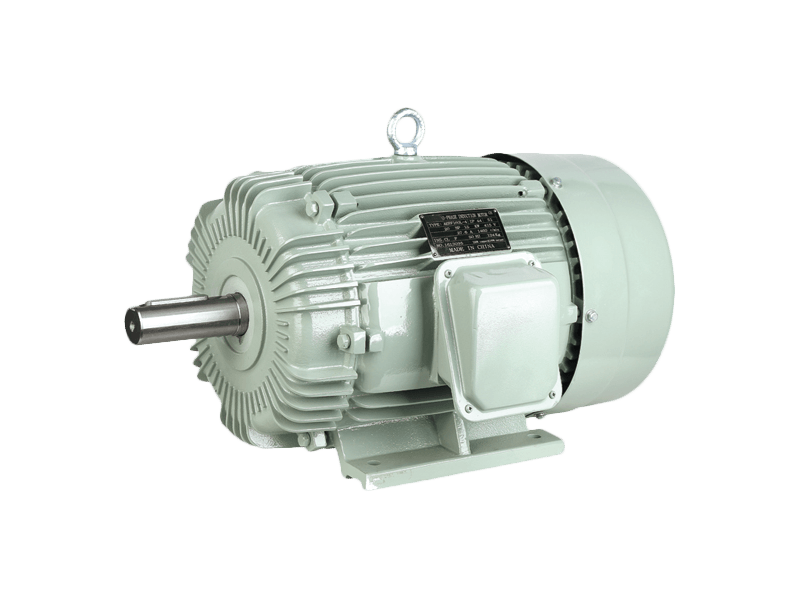
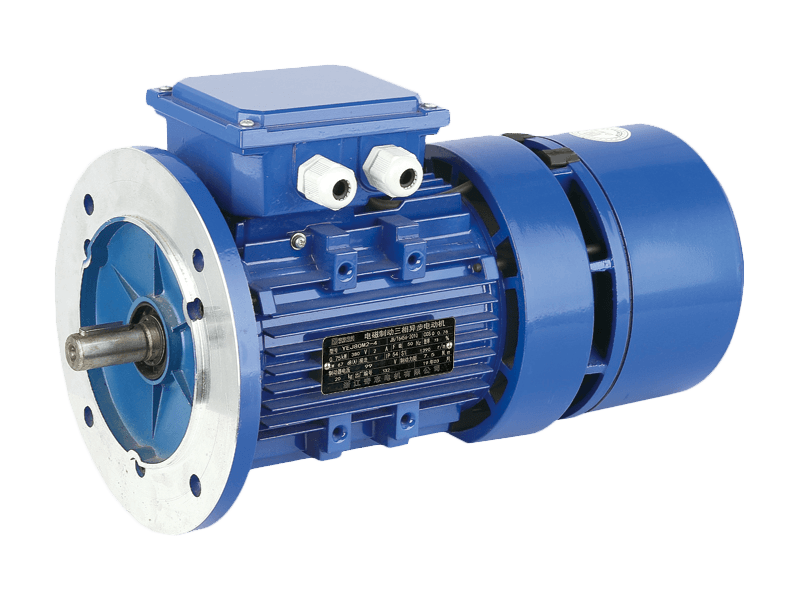
A Brake Three-Phase Asynchronous Motor is chosen for what the shaft does when the power goes away: it stops and stays stopped. Zhejiang Qizhi Motor Co., Ltd. builds this drive in the YEJ and YEJA series, both power-off designs in which the brake closes by itself whenever current is lost. On a hoist, a lifting platform or an inclined conveyor, that behavior decides where the load rests after a stop command, a tripped breaker or a grid interruption.
Inside the brake, springs press a friction disc against the braking surface. Energizing the coil pulls the armature back and frees the rotor, and cutting the current lets the springs clamp the disc again. The holding force comes from springs, not from electricity, so a lost supply moves the machine toward its safe state. That layout is described as fail-safe, and it is the reason this motor type sits on hoists, lifting platforms and inclined conveyors, where the load has to stay where it was put.
The two series reach the same result in different ways. The YEJ series pairs the motor with a DC round brake. The YEJA series joins a standard Y2 three-phase motor to an AZML three-phase AC electromagnetic brake, with the rear shaft end connected to the friction disc through a spline and the electromagnet fixed to the rear end cover. The AC brake runs from the same supply voltage as the motor, so a Brake Three-Phase Asynchronous Motor of the YEJA type needs no AC-DC conversion rectifier.
A four-pole motor turns at about 1,400 r/min or above, and the load keeps moving while the brake closes. Stopping position therefore comes from two variables: braking torque and response time. On the YEJ series, the no-load braking time is rated at no more than 0.20 s on the smallest frames and 0.45 s on the 200 and 225 frames. At 1,400 r/min, a shaft turns fewer than five revolutions in 0.20 s even if its speed did not drop at all, which is why a conveyor can halt at a transfer point and a stage winch can hold at a marked height.
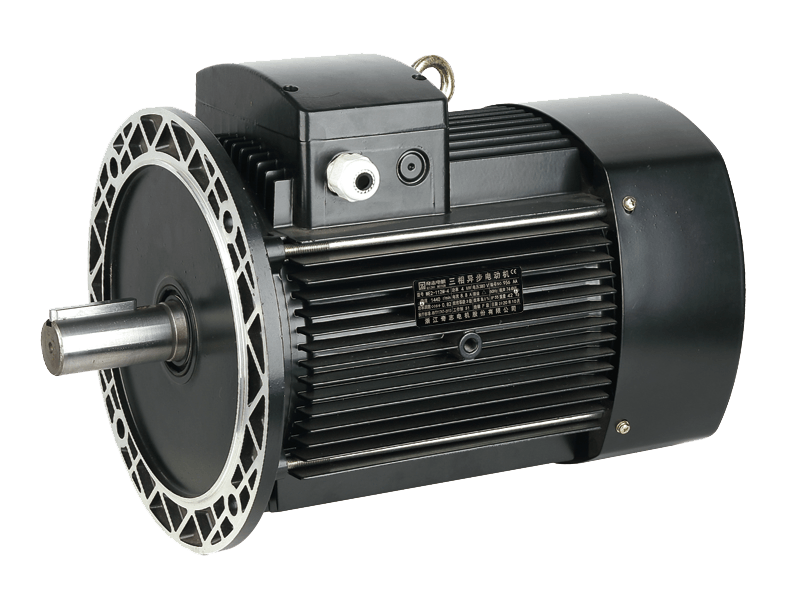
A drive that stops at the same transfer point hundreds of times in a shift needs the same stop each time, and that repeatability comes from steady spring force and a steady air gap. Static braking torque on the YEJ series rises from 7.5 N·m to 450 N·m across the range, and the YEJA series has an adjustable braking moment, so a Brake Three-Phase Asynchronous Motor can be set to the weight and inertia of the machine it drives. A manual release device lets the load be moved by hand during installation or maintenance, and the YEJA series allows a self-locking or temporary wrench to be selected.
Friction linings wear a little with every stop. As they thin, the air gap between the armature and the electromagnet widens and the release pull weakens. Air gap adjustment at regular intervals is routine work on any spring-set brake, and it keeps a Brake Three-Phase Asynchronous Motor holding at its rated torque through a long service life.
Work environments add their own load. Cotton yarn, paper scraps, dust, grease, iron scraps and powder all settle on friction surfaces in textile, packaging and metalworking plants. The YEJA brake meets this with live parts sealed in an epoxy resin shell and a fully sealed structure once the brake is assembled with the motor. A two-position junction box gives the motor and the brake separate terminal boards, so the brake circuit can be examined on its own.
The DC brake of the YEJ series and the AC brake of the YEJA series suit different machines. The YEJ series reaches the 225 frame, with flange and mounting dimensions that match the Y2 series, which fits heavier lifting and conveying duty. It is offered with optional PTC thermistors, and frames 160 and above can be fitted with a re-greasing system, which suits drives that stop and start often. The YEJA series runs from the 63 frame to the 180 frame, a range that covers small packaging lines, light conveyors and stage equipment, and different voltages and frequencies can be designed and manufactured separately.
A Brake Three-Phase Asynchronous Motor from either series is therefore selected by the machine's stopping job: how far the load may travel after the signal, how much torque holds it, and how the brake is supplied.
 中文简体
 русский
 Español
