


The IE3 motor has remained a widely specified electric motor across industrial fans, pumps, compressors, and conveyor systems. Unlike lower-efficiency IE1 or IE2 designs, an IE3 motor meets higher performance standards that reduce electricity consumption for the same mechanical output. Plant managers and equipment specifiers have adopted the IE3 motor as the baseline choice for new installations in many regions. The efficiency level of an IE3 motor represents a balance between initial cost and long-term energy savings. Manufacturers of industrial equipment continue to offer the IE3 motor as their standard efficiency offering.
Efficiency ratings for an IE3 motor are defined by international standards that specify small performance at full, three-quarter, and half load points. An IE3 motor achieves efficiency levels approximately 5 to 10 percentage points higher than IE1 motors across the same power range. The losses reduced in an IE3 motor include stator and rotor resistance losses, core losses, and friction losses. A properly applied IE3 motor converts a higher percentage of input electrical power into mechanical shaft power compared to less efficient alternatives. The payback period for selecting an IE3 motor over an IE2 motor depends on operating hours and local electricity rates.
Construction features of an IE3 motor contribute to its improved efficiency. A longer stator core in an IE3 motor allows more copper windings, reducing resistance losses in the motor windings. Higher-grade electrical steel in an IE3 motor lowers core losses caused by magnetic reversal during operation. The rotor design of an IE3 motor uses optimized bar geometry that reduces slip losses compared to standard rotors. A smaller cooling fan on some IE3 motor designs reduces windage losses, though this affects temperature rise under full load. The bearing selection in an IE3 motor influences friction losses and maintenance intervals.
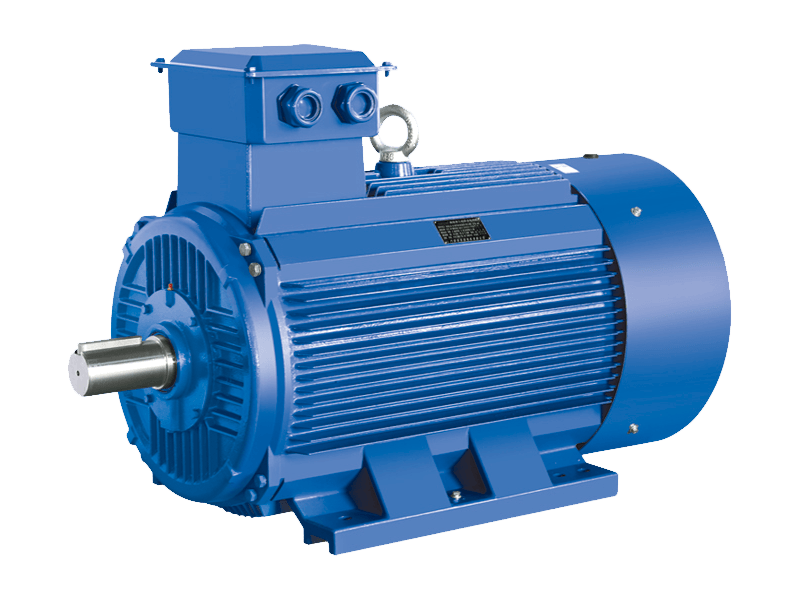
Frame size considerations for an IE3 motor differ from older efficiency classes. An IE3 motor of a given power rating may require a larger frame size than an IE2 motor to accommodate additional copper and steel. The mounting dimensions of an IE3 motor may differ from replacement applications originally designed for IE1 motors. A retrofit of an IE3 motor into existing equipment should verify that clearance and ventilation are sufficient. The weight of an IE3 motor is typically higher than a less efficient motor of the same power rating.
Applications for the IE3 motor span continuous-duty operations where energy costs matter. A pump driven by an IE3 motor consumes less electricity over a year of constant operation compared to an IE1 motor. A fan system using an IE3 motor may achieve the same airflow with lower power input when combined with speed control. Material handling conveyors in distribution centers benefit from the IE3 motor's consistent performance across load variations. A compressor package containing an IE3 motor reduces energy costs for facilities with compressed air demands.
The IE3 motor will likely continue as a standard offering while higher IE4 and IE5 classes gain share. The cost difference between IE3 motor and higher efficiency classes influences specification decisions for cost-sensitive projects. For engineers seeking predictable efficiency with established performance, the IE3 motor remains a practical choice.
 中文简体
中文简体 русский
 Español